With election day less than a week away, the discussion of the
factors affecting its outcome is becoming more intense. Many things can
affect how American citizens make their voting decisions in an election
year. This blog explores three different influences that carry weight in
the minds of Americans as they decide which candidate will get their
vote.
One
of the most important factors is how President Obama and Governor
Romney differ on their views of how best to address the
less-than-stellar economic situation. A flagging economy affects
virtually everyone, and so a careful study of how the economy has
changed and what can be done about it can assist in decision-making.
Particularly relevant is a review of the last four years that comprise
Barack Obama’s Presidency. What has he done to try to fix the economy,
and has it been effective? These are important questions that deserve
answers in an election year.
Another
influential factor is the current debate over the state of abortion. This blog post explores a couple prevalent perspectives on abortion held throughout America, and Obama's and Romney's opinions on the topic. It also speaks of what ideology most Americans seem to prefer, and which of the candidates seems to better represent the desires of the American people as a whole.
The third topic addresses celebrities and their
relationship to other people––particularly how celebrities possess the ability
to impact many people significantly, not only fans. Fans will sometimes blindly
accept the opinions and perspectives of their idol, a celebrity, because they
feel that they identify with him or her. However, this can prevent them from
taking a real look at the issues and what their opinions actually are. When candidates
in the election are become celebrities, this can cause voting based on emotions
rather than logical thought.
In
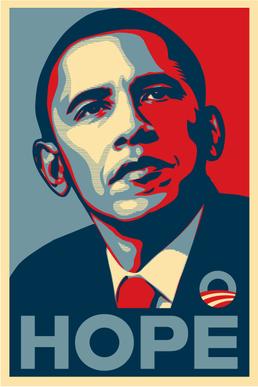
2008, Barack Obama ran his presidential campaign on a theme of “hope and
change”. He promised that he would turn around the failing U.S. economy and
increase equality among U.S. citizens. Four years later, however, little has
changed. According to a recent Gallup poll, a mere 30% of Americans are
satisfied with the direction the country is currently headed. “Official”
unemployment numbers are identical to what they were when Obama took office:
7.8%. But what do these numbers mean, and why aren’t things getting better? A
quick glance at some important information can tell us a lot.
In a
recession, the most important number is the percentage of people who are
unemployed. Every month, stock traders, politicians, and journalists anxiously
look forward to the time when the Bureau of Labor Statistics (BLS) releases the
results of its most recent unemployment study. During Obama’s term as
President, the official unemployment rate peaked at 10% in October of 2009.
Since then, it has fallen to its most recent value of 7.8%, precisely what it
was when the president took the oath of office. But the important thing to
realize is that the official unemployment number can be very misleading.
In each
of its studies, the BLS actually publishes six different measure of unemployment,
each using different definitions and taking into account different information. The “official” number that everyone talks about is the U-3 unemployment
statistic, which is a simple measure of what percentage of people that are
looking for work cannot find a job. However, this number does not accurately reflect the true unemployment
rate. The number that is most accurate is the BLS’s U-6 statistic, which
accounts for two additional groups.
The first is those people who have simply
given up on finding work because they have been looking for a very long time
and nobody will hire them.
The second is those who are underemployed: a good
example would be the recent college graduate with a degree in biochemistry who
can only find a part-time job wiping tables at McDonald’s, which is not
sufficient to live on.
While the current U-3 unemployment rate is
7.8%, the U-6 rate is 14.7%. This is alarming! One in seven people in the
country can’t find a decent job! Additionally, this rate is actually 0.5% higher than it was when Barack Obama
took office. For all his claims about how much he has done to fix the economy
since he was elected, frankly, the best that can be said is that things are
only slightly worse than they were four years ago.
When we also consider how
the federal deficit has ballooned to over a trillion dollars every year that he
has been in office, and the fact that the federal debt now exceeds that GDP of
the entire country, less generous conclusions could be drawn as to Obama’s
performance in his presidency. Factor this as you will into your opinions and
voting decisions. You have been informed.
For the last several decades,
the arguments concerning the rights of a woman to have an abortion have run
rampant. It is currently one of the most prevalent arguments in swing states,
with 39% of the polled women from the swing states ranking the debate of abortion as their most important consideration in the election. Both ends of the argument seem
to have reasonable ideologies- both focusing on the right of the individual, the
difference being which individual receives the spotlight—the fetus, or the
mother carrying the undesired creature.
In a nation-wide poll
conducted by CNN, over half of the nation’s population (52%) said that
abortions should be illegal in all or most circumstances. Of that 52%, only 15%
claimed that it should be illegal in all circumstances, while the remaining 37%
claimed that it should just be outlawed in most circumstances. When looking at
the other side, of the 44% which claimed that abortion should be legal in all
or mostly all circumstances, 9% also agreed that it depended on the reasoning for the abortion.
With this in mind, we
can examine the main Presidential candidates' positions on the
subject. The general summary is the following:
Obama believes that abortion should be allowed in all
cases, and that the morning after pill should be available to all girls
over 16 years of age. Additionally, he argues that everyone should be
allowed free access to birth control, which would be federally funded.
Romney believes that birth control should only be
provided in cases of rape, incest, or danger to the mother's life. He does
not want to federally fund birth control.
When looking at these
their ideals, it is valuable to note what the majority of Americans claimed
to be their feelings concerning abortion. According to CNN's polls, 99% of the
population opposed the use of birth control when used for "convenience,
social, or birth control reasons." One should also compare that to the 88% of
those polled who agreed that if a woman's life is endangered then abortion is
an acceptable solution.
In cases of rape or incest, or when the woman’s health is in danger 83% of the poll group agreed that abortion should be allowed. From looking at the nation’s averages, it seems clear that abortion is considered something which should be avoided if possible, but in extenuating circumstances is acceptable.
(Click here to see the Vice Presidential debate on Abortion)
Although both sides of
the debate are understandable, it seems as though, judging through the lenses
of these third-party political polls, what Romney offers on the issue is
what the majority of Americans desire. Obama's proposal would include spending
cash the government doesn't have to do something that the vast majority of tax
payers don't want to have happen. Considering that a president is someone who is supposed
to act on behalf of his people, it seems that, on this issue, Romney
best represents Americans’ interests.
Whenever I’m watching television or perusing the
internet, I never fail to see a legion of rabid fans of bowing and scraping at
the feet of some “impressive-looking” celebrity. It’s almost like he or she is
a King or Queen parading for the peasants—except usually admiring peasants
don’t tear out their hair and scream with ecstatic vigor.
It’s almost as if the fans worship their “monarch,”
albeit in an incredibly irreverent way.
So that got me thinking about why
people would behave like a neat-freak finding a mud pit in their living room… If
they react so physically to the appearance of a star, how is their thought
process affected by a celebrity’s political views, moral values, etc.?
Well, in a US-UK study, 59% of
those surveyed claimed that a celebrity had an influence over their attitudes
or beliefs (Boon & Lomore, 2001).
Honestly, I don’t feel I can relate to this form of
mob-mentality, simply because my psychology isn’t consistent with the worship
of imperfect mortal beings—but first let’s perform a check.
According to one Boorstin, a celebrity is defined as
“someone who is known for being well-known”. Under this definition, celebrities
don’t just include actors and singers. A study defined that celebrities can be
involved in Science, Politics, Religion, or Medicine, too.
Now if a celebrity’s “specialty” (science, acting,
etc.) is inherently different from another discipline, it should make sense
that the “fans” of that celebrity act differently from the fans of one from a
different discipline.
Take President Monson for example. Among the LDS
culture he fulfills the definition of a celebrity. If he came to BYU for
devotional (as he has occasionally in the past), people wouldn’t scream like maniacs
and pull out their hair. Why?
If you’re reading this, then you probably already
know. He’s a religious figure, not some famous actor. His renown comes through
the nourishing of souls, not the rotting of brains.
I intend to appear facetiously despondent towards
the entertainment industry, but this illustrates another point; different
celebrities, and especially different “genres” of celebrities, appeal to
different people. I’m a big fan of President Monson, due to his role in
religion, and not so much for most actors and singers. I can relate to
President Monson more because of how much I do
relate to him. Meanwhile, those “popular” celebrities often represent something
that is against my values.
We are seeing a similar case in the 2012
presidential election. Governor Romney is known to be LDS, and there are
extremes in reactions. There are those whose backgrounds and values do not
relate Mormonism, and these can fall into a trap of misunderstanding despite
Romney’s view on the issues.
However, an equal risk is that those who love
Mormons, particularly LDS people, to support Romney simply because he is a
relatable figure that has similar values. Weighing a candidate’s values is not
a bad thing, but if it serves as a distraction from the issues, then relatable
figures can be a negative influence indeed.