In
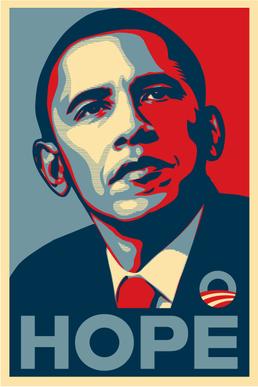
2008, Barack Obama ran his presidential campaign on a theme of “hope and
change”. He promised that he would turn around the failing U.S. economy and
increase equality among U.S. citizens.
Four years later, however, little has changed. According to a recent Gallup poll, a mere 30% of Americans are satisfied with the direction the country is currently headed. “Official” unemployment numbers are identical to what they were when Obama took office: 7.8%. But what do these numbers mean, and why aren’t things getting better? A quick glance at some important information can tell us a lot.
Four years later, however, little has changed. According to a recent Gallup poll, a mere 30% of Americans are satisfied with the direction the country is currently headed. “Official” unemployment numbers are identical to what they were when Obama took office: 7.8%. But what do these numbers mean, and why aren’t things getting better? A quick glance at some important information can tell us a lot.
In a
recession, the most important number is the percentage of people who are
unemployed. Every month, stock traders, politicians, and journalists anxiously
look forward to the time when the Bureau of Labor Statistics (BLS) releases the
results of its most recent unemployment study.
During Obama’s term as President, the official unemployment rate peaked at 10% in October of 2009. Since then, it has fallen to its most recent value of 7.8%, precisely what it was when the president took the oath of office. But the important thing to realize is that the official unemployment number can be very misleading.
During Obama’s term as President, the official unemployment rate peaked at 10% in October of 2009. Since then, it has fallen to its most recent value of 7.8%, precisely what it was when the president took the oath of office. But the important thing to realize is that the official unemployment number can be very misleading.
In each
of its studies, the BLS actually publishes six different measure of unemployment,
each using different definitions and taking into account different information. The “official” number that everyone talks about is the U-3 unemployment
statistic, which is a simple measure of what percentage of people that are
looking for work cannot find a job.
However, this number does not accurately reflect the true unemployment rate. The number that is most accurate is the BLS’s U-6 statistic, which accounts for two additional groups.
However, this number does not accurately reflect the true unemployment rate. The number that is most accurate is the BLS’s U-6 statistic, which accounts for two additional groups.
- The first is those people who have simply given up on finding work because they have been looking for a very long time and nobody will hire them.
- The second is those who are underemployed: a good example would be the recent college graduate with a degree in biochemistry who can only find a part-time job wiping tables at McDonald’s, which is not sufficient to live on.
 While the current U-3 unemployment rate is
7.8%, the U-6 rate is 14.7%. This is alarming! One in seven people in the
country can’t find a decent job! Additionally, this rate is actually 0.5% higher than it was when Barack Obama
took office. For all his claims about how much he has done to fix the economy
since he was elected, frankly, the best that can be said is that things are
only slightly worse than they were four years ago.
While the current U-3 unemployment rate is
7.8%, the U-6 rate is 14.7%. This is alarming! One in seven people in the
country can’t find a decent job! Additionally, this rate is actually 0.5% higher than it was when Barack Obama
took office. For all his claims about how much he has done to fix the economy
since he was elected, frankly, the best that can be said is that things are
only slightly worse than they were four years ago. When we also consider how the federal deficit has ballooned to over a trillion dollars every year that he has been in office, and the fact that the federal debt now exceeds that GDP of the entire country, less generous conclusions could be drawn as to Obama’s performance in his presidency. Factor this as you will into your opinions and voting decisions. You have been informed.

I appreciated the statistics and your explanation, but I think this point has been made. Also, I think it does not deal with how the economy got into its present state. Those who support Obama would probably say it is because Republicans are thwarting his attempts to make policy changes, or that it is simply due to the state of the economy before he took office. It would make for a stronger argument if you addressed those.
ReplyDeleteYou bring up two good points with the counterarguments. The first is easily addressed. The 2008 election that won Obama the office of President also resulted in Democrat control of Congress, with majorities in both the House and the Senate. Obama could've passed virtually anything he wanted to; that's how he pushed Obamacare through. He had a full two years until the Republican landslide in 2010 when he could've implemented any policy that he thought would fix the economy, and what happened? A lousy excuse for a recovery that's hardly a recovery at all. Sure, the economy was tanking on the day he was inaugurated, but we can compare it to a similar event 28 years earlier. The recession of the early 1980's peaked at 10.8%, and was similar in size and impact to the 2007/2008 recession. However, the recoveries under Ronald Reagan and Barack Obama are two radically different stories. From an article on the website of The Wall Street Journal:
Delete"Fifty-five months after the recession started in July 1981, the Reagan recovery had created 7.8 million more jobs than when the recession started, and real per capita gross domestic product was up by $3,091. Fifty-five months after the recession that began in December 2007, there were four million fewer Americans working than when the recession started, and real per capita GDP was down $803."
It’s quite easily seen that Obama can’t blame all the economic woes on the previous administration. The 1980s recession started after Reagan took office and had been completely turned around by the time he was reelected in 1984. The most recent recession began before Obama took office and we still haven’t returned to the pre-recession growth rates of 3 to 4 percent.
I enjoyed your insight on the financial analysis of the country for the last several years and how it relates to this particular election. The economy is a huge topic right now across the news and I see headlines for it every day online. Obama has done a lot to influence the economy, for good or for bad and that will greatly affect voter’s choice in this next election coming up very shortly. But what about Romney’s past track record with economics as governor specifically? Although he hasn’t let the country in financial downfall or upswing, he still has opinions and ways of going about economic policy. Although America might not like the results of Obama’s work, will Romney do any better? Unfortunately, a lot of our country is uninformed about the economy and specifically about Romney and Obama’s platforms. But I thought your analysis of statistics for unemployment were very relevant, clear and concise which will be easy for other people to understand when it comes to being informed.
ReplyDeleteRomney’s great accomplishment as governor was his elimination of the $1 billion+ deficit in the Massachusetts state budget. He was less successful with addressing unemployment. Massachusetts was hit hard by the dot-com bubble burst just before Romney took office, so it started out on very bad footing. Romney was also handicapped by a Democratic majority in the state’s legislature, so he was often unable to implement his ideal economic policies. Additionally, governors historically don’t have a lot of control over their state unemployment rates because those are affected by so many external factors. So our evaluation of how Romney will do on economics ultimately has to go off of what he says he will do if elected. Without going into an in-depth analysis, we can simply realize that it comes down to a big difference in political ideology. Liberal economic policies haven’t done so well over the past four years, but a conservative president might have more success.
DeleteYou correctly point out that the drop in the national labor participation rate is a factor pushing down current unemployment statistics. However, this is beside the point. Yes, the economy is not significantly stronger in 2012 than when President Obama first took office, but the reality is that the president does not have nearly a significant influence on the economy as people seem to believe. Ultimately, private investment tanked the economy and private investment will produce recovery. Government action does play a role in determining private sector decisions with the impact of central banking and Keynesian stimulus, but note the origins of these actions. The Federal Reserve Board is an independent government entity that is essentially sheltered from political pressure, even from the president or Congress. If you aren’t happy with the way they handled the money supply or discount rates during the recession, blame the unelected board members, not the president. Now as for stimulus, recall that Obama actually did take this step with $787 billion of government spending and tax cuts to combat the effects of sticky wages and zero consumer confidence. So how exactly has Obama “mismanaged” the economy? The only real criticism you could level against Obama would be not spending enough: he used both supply-side and demand-side economic incentives and exercised the only option government has to spur growth. More importantly, an economy that isn’t magically back to normal in four years means nothing. In the end, even almost $1 trillion of controlled spending does nothing compared to the enormous power of international macroeconomic trends. If the economy is America’s primary political issue, we need to look beyond the presidency for the culprits.
ReplyDeleteYou say that the president alone has little control over the economy, and this is true. But as I wrote in my reply to Camille’s comment, Obama had a full two years after the 2008 election during which he could have done virtually anything he wanted because he had the support of a Democrat-controlled Congress. The president and Congress combined have a lot of influence in passing emergency legislation to address the economic situation. I do not support their choice of action. Bush and his Congress started the problem with their initial stimulus, and then Obama and his Congress continued the trend. My opinion is that the government became too involved in the economy. I don’t pretend to understand all the intricacies of the financial crisis and how the stimulus programs operated, but I do understand that we’ve increased spending since the recession and added over five trillion dollars to the debt, and we haven’t had a robust recovery to show for it like we have in previous recessions (most notably the Reagan recovery in the ‘80s, which is also mentioned in my reply to Camille’s comment). The Federal Reserve did fine for the most part. Lowering interest rates in particular is a great example of what it should have done, and did. My issue is with the President, who made fabulous claims about what he could change and then didn’t fix much of anything.
DeleteWyatt, I liked your use of statistics. I actually read the first two paragraphs and thought "I really hope he talks about the definition of unemployment." And you did. Thank you! I think that the case you make is not as arguable as it could be. It would be a lot more interesting if you looked at evidence for how Mitt Romney would act differently, and/or focused more on how Obama had such huge promises that did not happen, and not so much that he just did not fix the economy. I think the latter would help your argument that Obama failed considering the counterargument that the president does not have much power to fix an economy. It might be an effective refutation to talk about how the trend of unemployment with respect to time has changed in the last four years. Also, there are some very powerful polls that say a big majority of Americans view the economy as one of their top-two most important issues. When the result of the general election is announced, it will help your argument a lot if Romney will have won. If he does not win, though, you can point to the fact that most incumbent presidents who are re-elected do so with a big margin of victory, and Obama (probably) will have not.
ReplyDeleteSince this is just a blog post, I couldn’t put all my arguments into it. I instead chose to focus on that particular aspect of the unemployment numbers. What these numbers show is that the Obama administration is putting on this show of having been so successful in fixing the economy, when in reality Obama hasn’t lived up to the promises he made during his campaign. This brings us to the issue of his underperformance, which, as you pointed out, makes my topic more arguable. It is much easier to prove that the current president has been incompetent than it is to prove that a new president would fix everything. I mentioned something along these lines when Camille and Alex brought up the point that the president often does not have as much power over the economy as people believe. That may be the case most of the time, but since Obama promised so much during his campaign, he was expected to deliver. Since he hasn’t, people have lost patience with him, so any change in policy would be welcomed. The economy IS the key issue this election. Whether Romney’s plans would work better is mostly speculative, as is any study of ‘what-ifs’. However, what can be done is to compare his proposed policies with the results of similar policies that have been implemented in the past and from there draw conclusions as to what would be the most likely outcome of his plans.
Delete